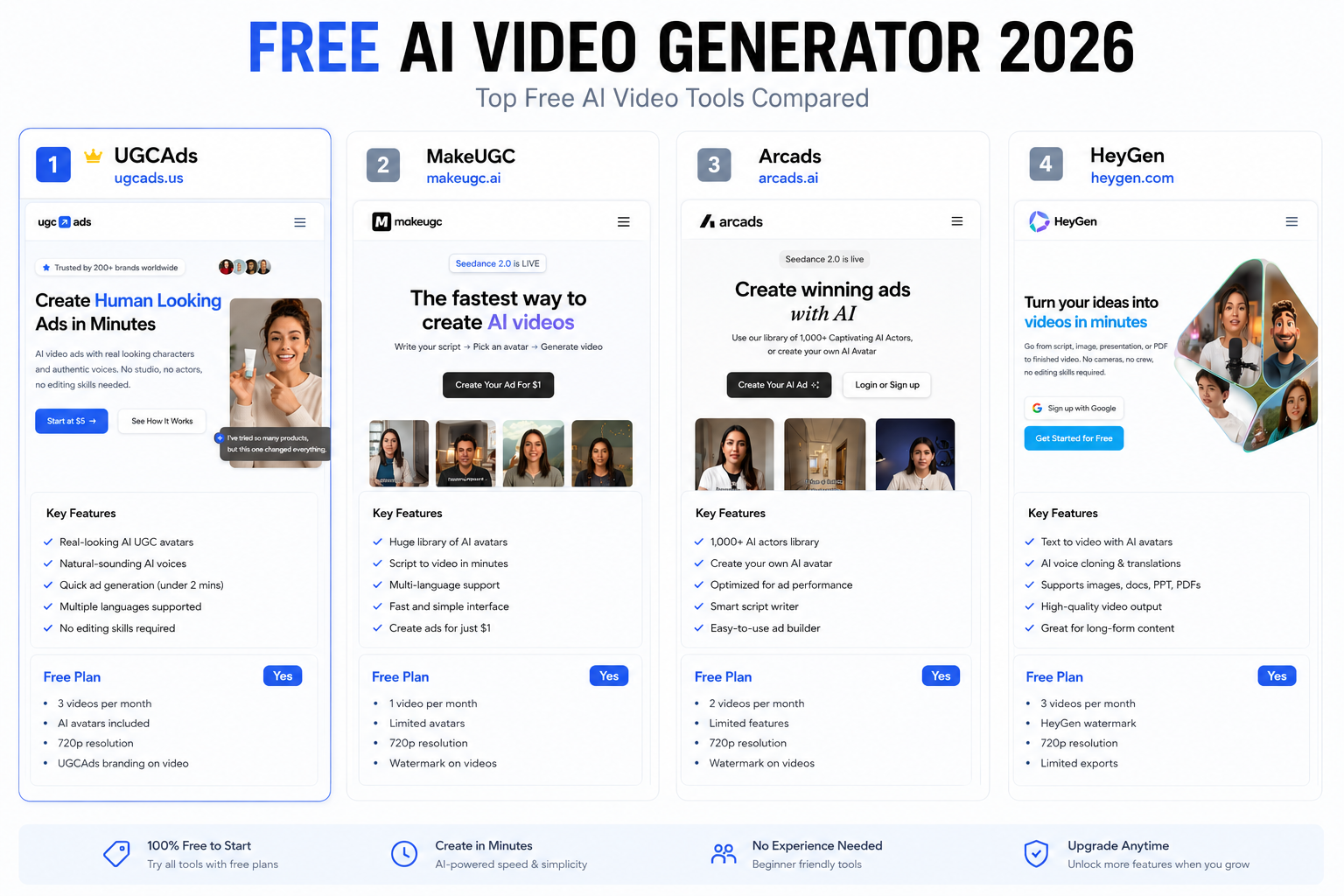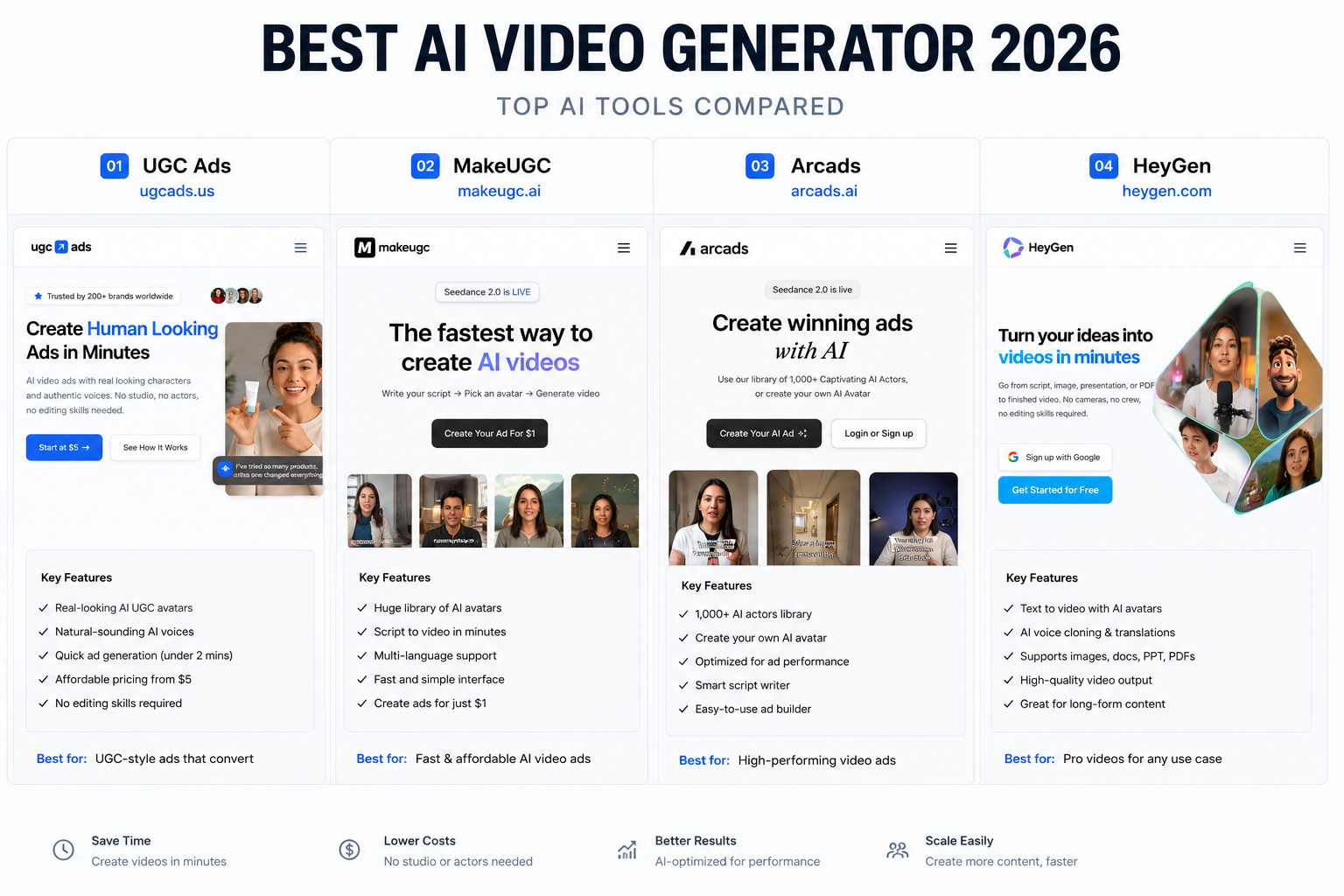
Why I Can Write This Comparison Without Bias (Mostly)
I built UGCAds. I am obviously going to recommend it. I want to acknowledge that upfront so you can discount for it appropriately.
What I can also tell you is that before building UGCAds, I spent seven years in performance marketing managing campaigns for e-commerce brands. I spent a lot of that time buying agency and freelancer production services. I know what the traditional production experience actually looks like — the delays, the revision cycles, the moments when you get a finished video that is technically acceptable but does not feel right for the campaign.
This comparison is not "AI is always better." There are formats and contexts where traditional production genuinely has an edge. I will tell you where those are. But for the majority of direct-response advertising in 2026, the economics have shifted decisively and brands that are not aware of this are paying a significant opportunity cost.
What Does Traditional Video Ad Production Actually Cost?
Let me give you accurate current market rates, not the inflated numbers that get used to make AI look better than it is.
Freelance UGC creators via Billo, Insense, or direct outreach:
- Entry-level creator (under 10,000 followers, basic equipment): $50-$100 per video
- Mid-tier creator (10,000-100,000 followers, good equipment and delivery): $100-$300 per video
- Top creator (100,000+ followers, professional-grade output): $300-$800+ per video
Production companies and video agencies:
- Boutique social-first agency: $300-$800 per finished ad
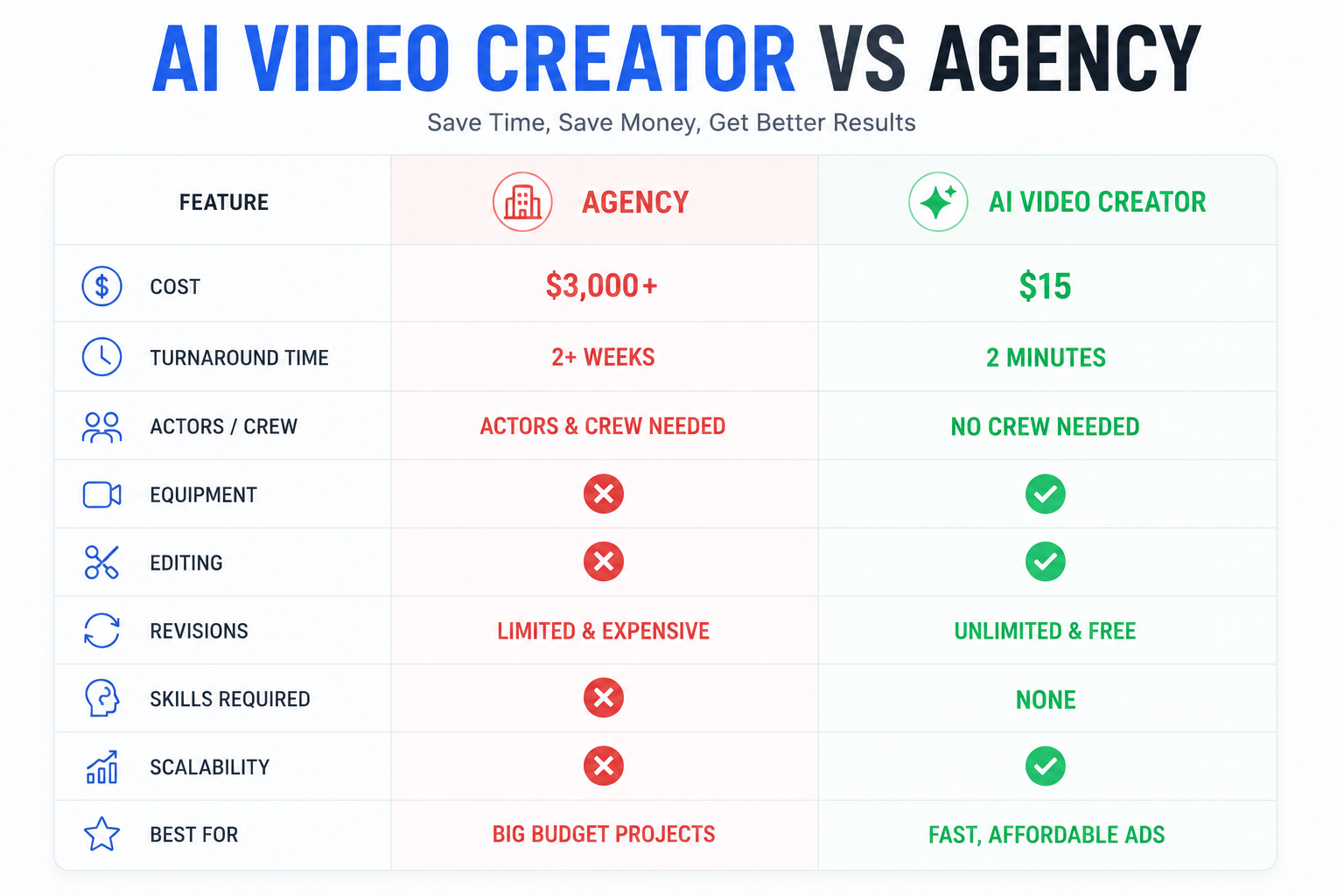
- Full-service creative agency: $800-$3,000 per ad
- Enterprise production company: $3,000-$15,000+ per ad
Typical timeline from brief to delivery:
- Freelance UGC creator: 7-14 days
- Boutique agency: 2-3 weeks
- Full-service agency: 3-6 weeks
For a brand that wants to run a proper creative test — 5-10 variations of a concept — traditional production means $500-$3,000 and 2-6 weeks before you have anything to run. That timeline is simply too long for modern paid social optimization.
What Does AI Video Creation Actually Cost?
Using UGCAds as the reference point (it is what I know best, and it is the most direct competitor to the freelance UGC creator market):
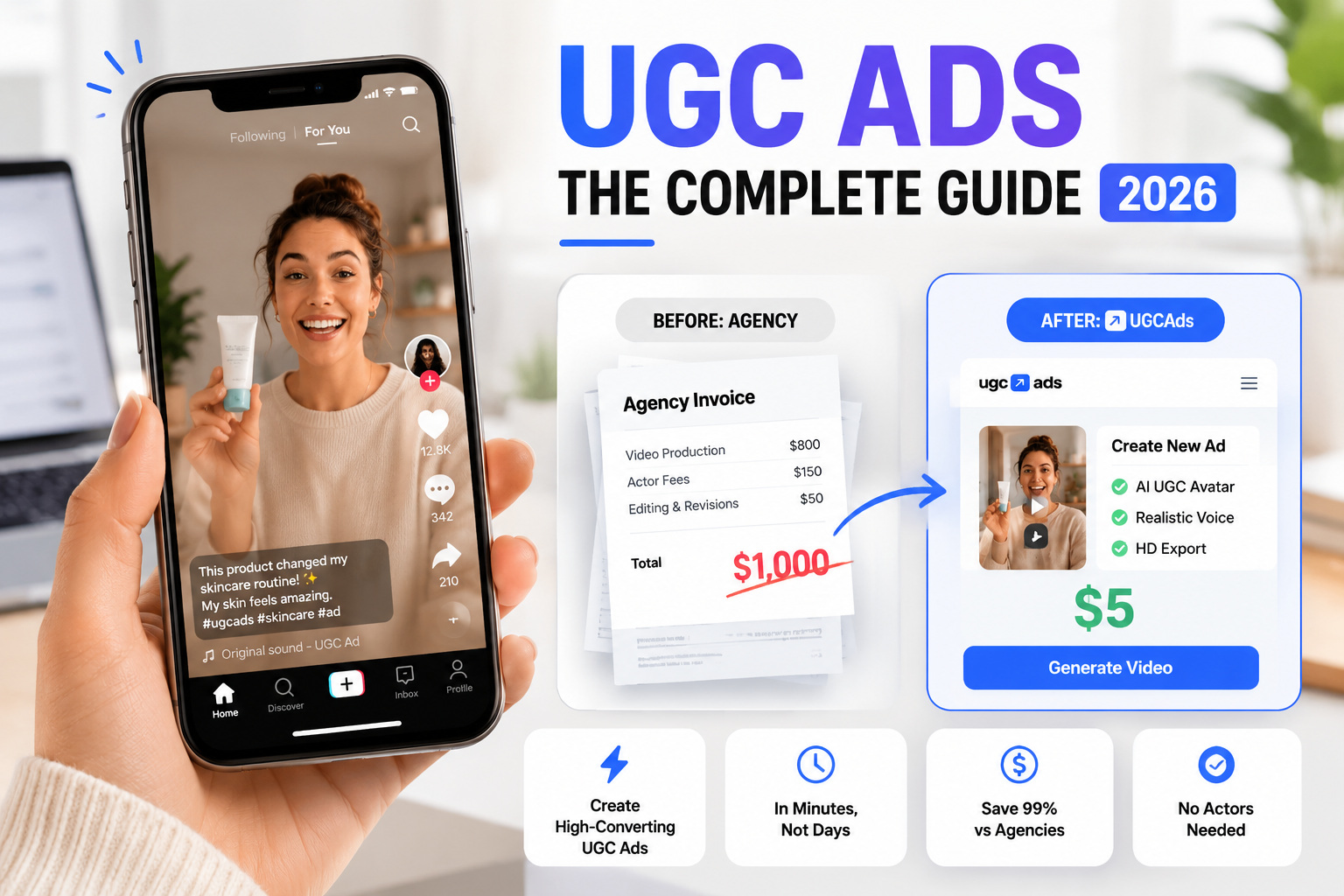
- Starter pack (one-time, no subscription): $5 for 1 video + 25 product photos + 8 try-on generations
- Basic plan ($39/month): 100 credits. At 15 credits per UGC video, that is approximately 6-7 video ads per month.
- Creator plan ($79/month): 300 credits. Approximately 20 video ads per month.
- Agency plan ($129/month): 500 credits. Approximately 33 video ads per month.
Per-video cost on the Creator plan: roughly $4. Turnaround per video: under 2 minutes with Seedance 2.
The simplest cost comparison: replacing a single $150 freelance creator video per month with AI generation saves you enough in the first month to cover a 5-month Creator plan subscription. At 5 videos per month, you are saving $700-$1,000 monthly versus the low end of the freelance creator market.
Quality Comparison: Where Does Each Win?
This is the part I want to be genuinely honest about, because overstating AI quality is the surest way to disappoint brands who try it based on inflated expectations.
Where AI video production wins:
For UGC-style direct-response ads on TikTok, Instagram Reels, and Facebook feed, the best AI video generators in 2026 produce output that performs comparably to mid-tier human UGC creators. In split tests I have observed, AI-generated UGC ads typically perform within 10-15% of human-created UGC on CTR and CPA. Given that AI costs 95% less, this is an obvious business win.
The "good enough" threshold for paid social advertising is lower than most brands initially assume. Viewers scrolling at feed speed are not doing a quality audit. They are making a split-second judgment about whether the content is interesting and relevant. The best AI video generators clear this bar for most product categories.
Where human creators win:
Authentic spontaneity. Real humans can improvise, react naturally to unexpected moments, and create the kind of genuinely unplanned content that is difficult to replicate with a scripted AI system. The highest-quality human UGC has an energy that current AI generation does not quite match.
Niche authenticity. A real dermatologist talking about a skincare product brings credibility that an AI avatar cannot provide. A real fitness coach demonstrating a supplement protocol is more convincing than an AI character. For categories where expertise or personal experience is central to the ad's credibility, human creators have an edge.
Complex physical demonstration. Anything involving detailed product assembly, cooking, complex application steps, or multi-stage processes. AI video handles simple product interaction well (holding, applying, pouring) but complex physical sequences remain challenging.
The Creative Testing Comparison Is Where the Decision Gets Clear
Forget the per-video cost comparison for a moment. The more important question is: what does this choice do to your creative testing capacity?
Creative testing for performance advertising works like this: you need to run multiple variations of an ad, observe which performs best, scale the winner, and iterate. The speed and cost of producing those variations determines how fast you can find winners and how many hypotheses you can test.
With traditional production:
- Producing 5 test creatives: $500-$2,500 and 2-3 weeks
- Running the test: 5-10 days
- Time to identify a winner and scale: 4-6 weeks from decision to scaled campaign
- Test cycles per quarter: roughly 2-3
With AI video creation:
- Producing 10 test creatives: $40-$100 and 3-4 hours
- Running the test: 5-10 days
- Time to identify a winner and scale: 1.5-2 weeks from decision to scaled campaign
- Test cycles per quarter: roughly 5-7
The AI advantage here is not just cost — it is the number of hypotheses you can test per quarter. Brands running 6 test cycles per quarter instead of 2 have three times as many opportunities to find a winning creative. Over a year, this compounds significantly.
A Wyzowl video marketing study found that brands that produce more creative variations see significantly better ad performance over time. The mechanism is straightforward: testing more hypotheses finds winners faster.
The Hybrid Approach: Best of Both
The most sophisticated brands I have talked to have landed on a hybrid production model that uses AI video for testing and human creators for scaling:
- Use AI video generation to produce 5-10 variations of a new concept. Test them all at a modest budget ($10-20/day each) for 5-7 days.
- When a variation demonstrates clear performance superiority (significantly better CTR and CPA), commission a human creator to produce a high-quality version of that exact concept with the proven hook.
- Scale the human-created version of the proven concept with significant budget behind it.
This approach gets the best outcome from both methods: cheap testing with AI, quality scaling with humans. You are not paying $300 per video to test a hypothesis that might not work — you only invest in human production when you already know the concept works.
Industries Where the Switch to AI Video Is Most Obvious
Some product categories have clearly better economics for AI video production than others:
Supplements and nutrition: The testimonial format dominates this category. A person looking directly at the camera saying "I noticed a difference in my energy levels within two weeks" is the archetypal high-performing supplement ad. AI video production is perfectly suited to this format.
Beauty and skincare: Combination of talking-head testimonials and before/after formats. AI try-on tools complement the video generation well. The UGC format is particularly dominant in beauty advertising.
Software and apps: Tutorial and benefit-callout formats work well with AI video. The avatar delivers the script; a screen recording can be edited in as a visual if needed.
Fashion and apparel: AI model try-on for product variations, combined with AI video for brand storytelling. The photoshoot component of UGCAds is particularly valuable for product catalog imagery alongside the video ads.
Home and lifestyle products: Product demonstrations, lifestyle integrations, before/after formats. All of these translate well to AI video.
Categories where traditional production still makes more sense: luxury goods (production quality is a brand signal), food and beverage (authentic texture and appeal is hard to replicate), live events and experiences (real footage is irreplaceable).
Making the Transition: A Practical Starting Point
If you have been using traditional production and want to test whether AI video can replace or supplement it, here is the lowest-risk way to find out:
Take a script you have already used for a human-created UGC ad that performed reasonably well. Generate an AI version of the same script on UGCAds (the $5 Starter covers this). Run the human version and the AI version head-to-head with the same budget, targeting, and placement.
This tells you, with your specific product and audience, whether AI video meets your quality bar. If the AI version performs within 20% of the human version, the economics favor transitioning production to AI. If it performs significantly worse, you have spent $5 finding that out.
Most brands that run this test find the performance gap is smaller than they expected. And the cost gap — $4 vs $150-$300 per video — is large enough that even a 20% performance disadvantage often makes AI production the better business decision at scale.